
Special Populations & Facilities Require Special Planning


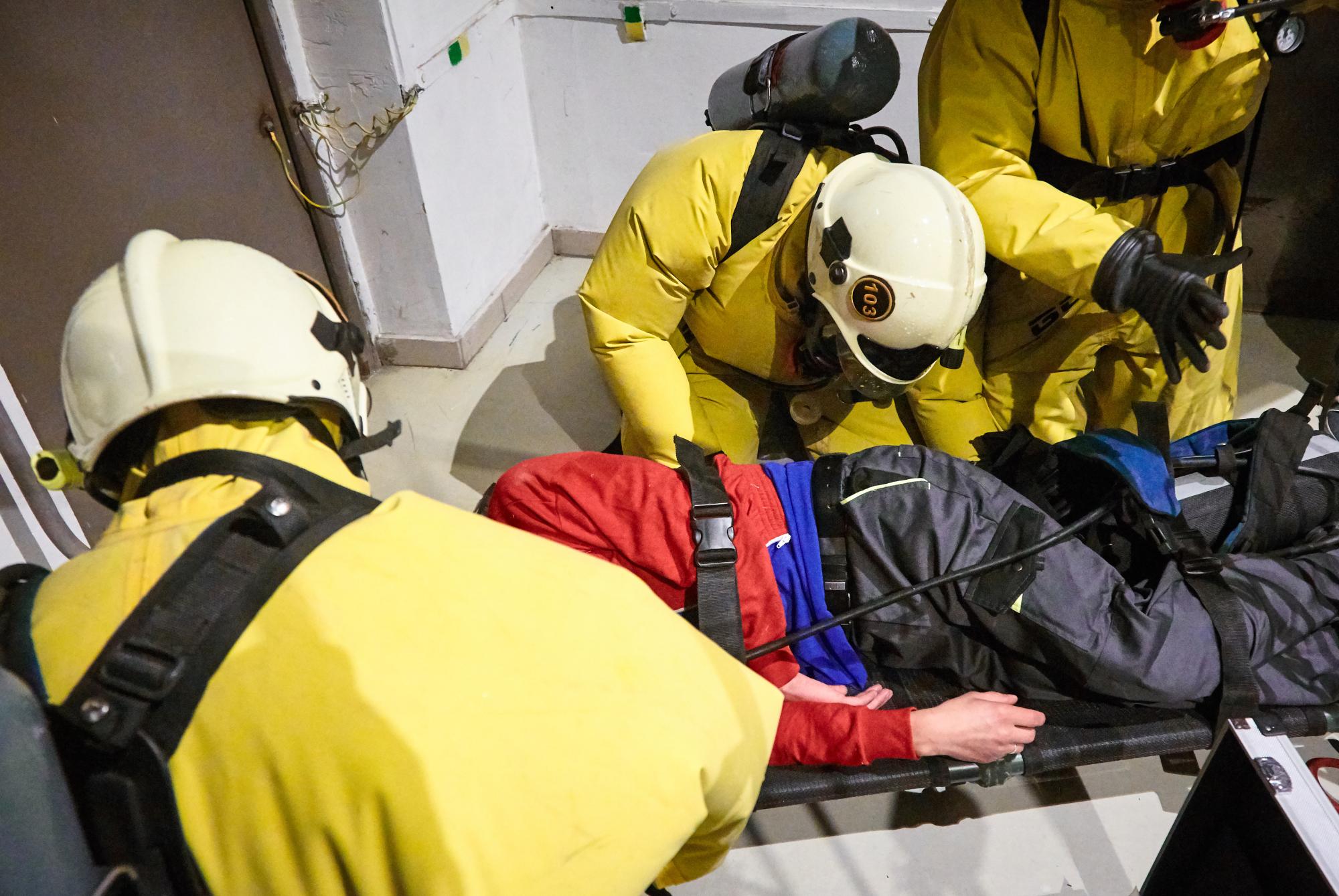
Helping Americans Plan to Mitigate Threats & Increase Resilience
Improving Hazard Vulnerability Assessments
Weather event intensity is increasing, with more frequent Category 4 and Category 5 hurricanes. Earthquakes are also increasing in frequency and getting stronger. Can your facilities continue operations during sustained 175 - 200 MPH winds and 20 to 40 inches of precipitation in 2-3 days? What about storm surges?
Are facilities operational with flooding or earthquakes of magnitude 7 to 8.5? Pandemics have national and global effects. How well does your current EPP cover these?
Does your plan include a full-scale cyberattack that includes gas attacks or disruption of the regional (or national) electrical power grid?
Risk Surfaces (4-Dimensional)
If you want to know your actual risk, forget crisis likelihood X severity = HVA risk calculations! Do they account for cascade failures! These require a multi-dimensional Risk Surface calculation, even if the regulatory body (State) doesn't require it.
Do what WORKS for you, not just what the State requires!
Understand your "event horizon," the point at which critical failures cause your EPP to cease functioning. Make an Action List to prevent reaching the event horizon and identify dependencies upon any third parties.
Your HVA needs to show hazards as a Risk Surface (topological Atlas) of the parameters (like shelter, access and critical resources), not just as a simple 2-dimensional table spreadsheet listing all independent vulnerabilities. If you make trivial plans, expect bad outcomes & even patient lawsuits.
Dry Runs & Practice Exercises
Many EPPs are reviewed with staff only once a year, and "tabletop" crisis exercises may also be infrequent. In a real crisis, there's a lot of adrenaline, and unless responses are practiced and second nature, decisions will be less than optimal. MSP can identify EPP weaknesses. Our consulting services can provide a method to do so.
Crises Today Are Becoming More Frequent & More Severe
MSP can provides customized planning and risk assessment, including cascade failures analysis and Hazard Vulnerability Assessment (HVA) calculations. Don't wait until the next crisis to fix problems in your previous plan.
If employees and other personal (and their families) are not personally prepared, the won't be reporting to work to implement the Facility's EPP, and it will fail.
Pandemics, Biological & Chemical Threats
All healthcare facilities have a state-reviewed Emergency Preparedness Plan (EPP) that explains tasks during emergency situations. How well did your plan work during the recent COVID-19 pandemic or previous crises? Judging from mortality rates, it could have worked better in NY, NJ and CA.
A pandemic or a cascade power grid interruption can easily be multi-year events. Is America's DHHS is still funding Covid-19, Ebola, Hantavirus and H5N1 viruses in labs in Ukraine and elsewhere? Since hospitals can't stop it, and elected officials won't stop it, all of us must be better prepared to deal with man-made crises to minimize preventable deaths, staff absenteeism, school disruptions, job losses, and global economic downturns.
Cyber & EMP Attacks
The FBI warns that America now faces the most significant risk of cyberattacks. Yet, in some EPP Hazard Vulnerability Assessments (HVAs), cyber-attacks are not mentioned or marginalized as "unlikely risks." Hospitals that have been victims of ransomware attacks know better!
EPPs often use a scale of risks ranging from Minimum (1), Moderate (2) or Maximum (3) and view most risks as static; however, risk severity can change dramatically as crisis duration extends and new vulnerabilities emerge. Is your EPP built on the assumption that "the emergency" will last only a week or a month? Will the EPP work if the emergency lasts three months, six months or even two years?
Long-Term Power Losses
Despite emergency power circuits and backup generators, most hospitals aren't adequately prepared for power failures lasting from many months to a year or the cascade failures of water, light, heat and transportation failures. Many EPPs rated such failures as independent events rather than as a risk surface in their Hazard Vulnerability Assessment (HVA) calculations. The combination of these inter-dependencies must also be accounted for in the HVA calculation, but often isn't.